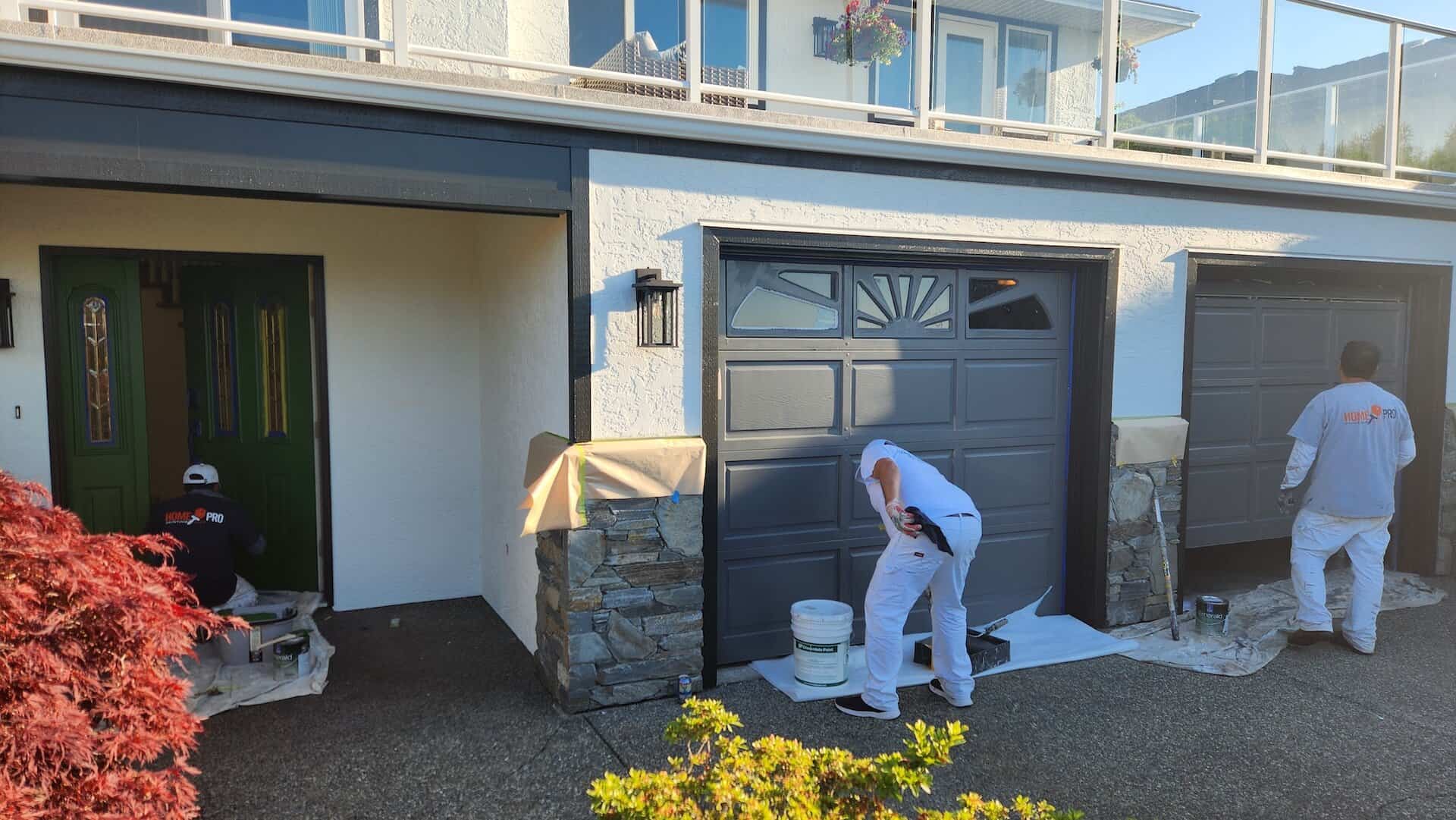
A proper exterior job starts with cleaning the surface. This removes dirt, mildew, and loose material so the paint has something solid to bond to.
From there, surfaces are scraped and sanded where needed, especially around peeling areas or rough edges. Gaps and joints are sealed with caulking to prevent moisture from getting in behind the paint.
Any exposed or repaired areas are then primed before applying paint. This step is often skipped, but it’s important for ensuring even coverage and proper adhesion.
Finally, a minimum of two full coats are applied — not just a quick pass. This helps create a consistent finish and improves durability over time.
Where corners get cut is usually in the prep. Skipping sanding, rushing caulking, or applying only one coat might save time upfront, but it almost always leads to a shorter lifespan and more issues down the road.
A good paint job isn’t just about how it looks when it’s done — it’s about how it holds up a few years later.